A Parent’s Guide to Play
Play in the Maple Bear Early Childhood Programs
All Maple Bear Early Childhood programs emphasize play and play-based learning as a critical component. Whether the children are learning language, developing literacy, exploring numeracy or discovering the natural world, they do so through activities and experiences that are play-based.
Understanding Play
Any activity or experience can be considered play, or play-based when…
- It is naturally motivating – no external reward is required
- There is enjoyment and/or positive affect demonstrated
- There is opportunity to self-direct and make some choices
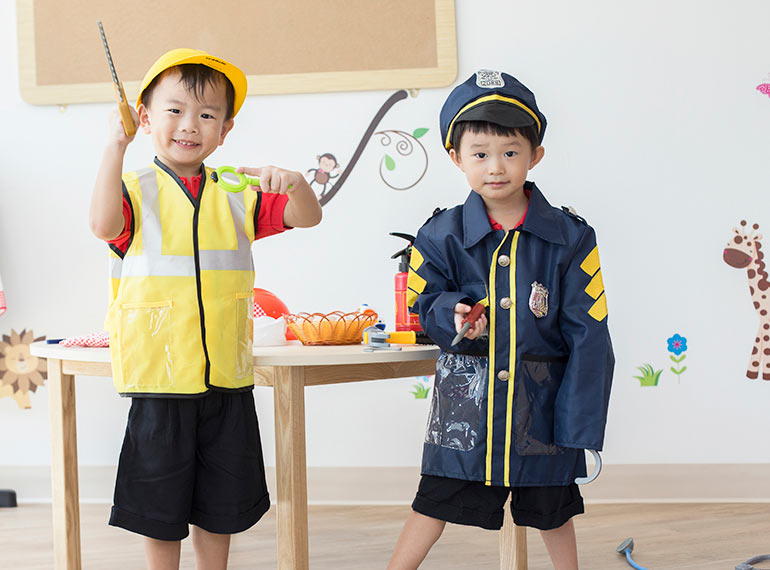
- There is opportunity to be creative and/or imaginative
- There is full engagement – both physically and mentally
- Repetition and practice are common
Although a toddler’s play will look and sound different from a kindergarten child’s play, a teenager’s play, or even an adult’s play, these characteristics will be the same.
Maple Bear teachers understand that young children learn best through play. In fact, young children are naturally effective learners if they are allowed to explore, discover, experiment, pretend and create in play-based environments. Teachers therefore plan and provide activities and experiences that nurture and develop these natural learning responses.
What does play or play-based learning look like in the classroom?
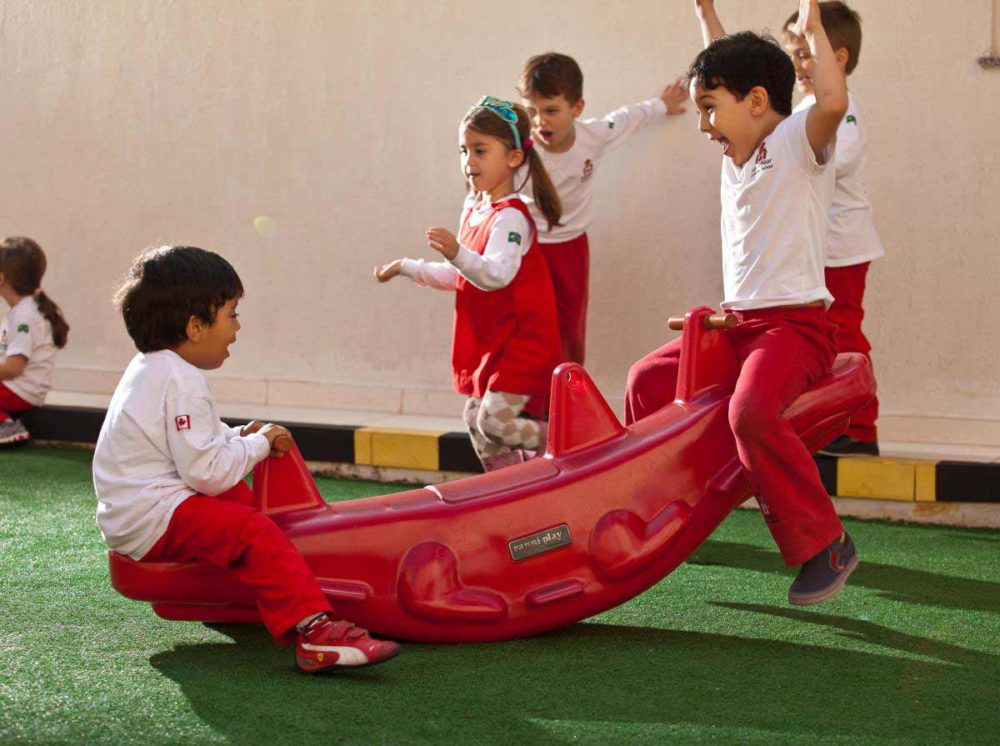
- You will see children being active, both physically and mentally.
- You will see children engaged in activities and experiences that are meaningful and interesting to them.
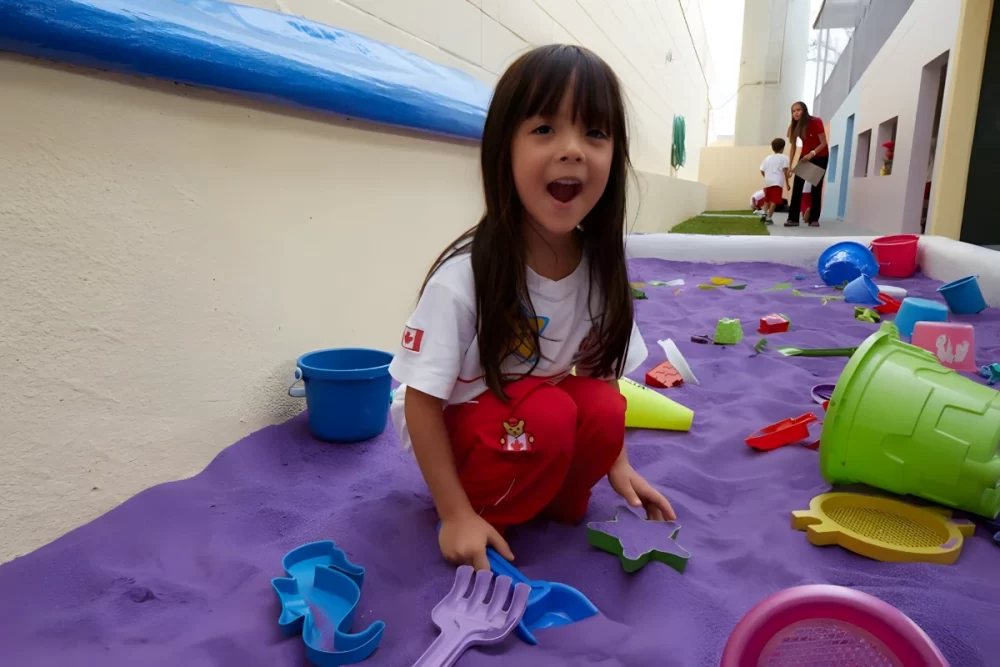
- You will see children using all their senses to explore and discover.
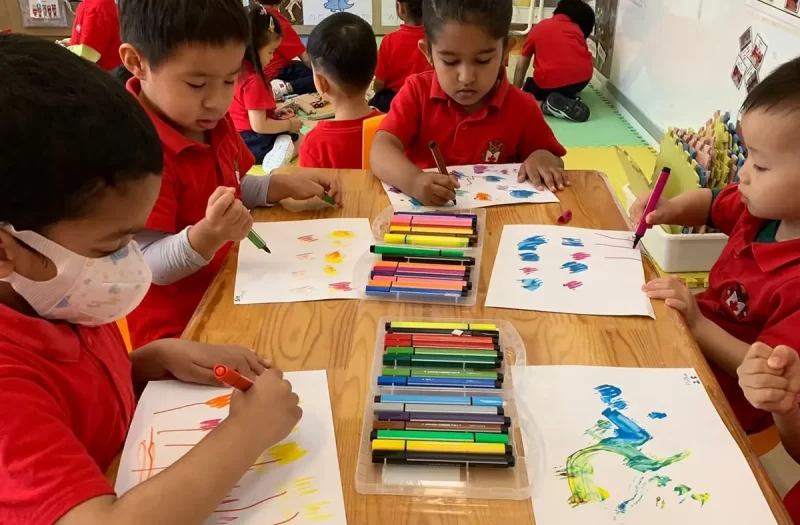
- You will see children engaged in hands-on activities.
Specifically, this might look like…
- A toddler filling containers with water and dumping them out repeatedly (fine motor skills, hand-eye coordination, beginning understanding of cause and effect, an understanding of the properties of water)
- A nursery child making “pizza” with play dough and sharing it with the teacher (fine motor skills, social language, numeracy concepts such as bigger than, smaller than, same as, divide, equal)
- A junior kindergarten child building a ship with Lego (hand-eye coordination, patterns, sequencing, problem-solving, creativity)
- An intermediate kindergarten child doing the “Hokey Pokey” dance (balance, oral language, right and left, co-operation).
Learning Through Play
Through play and play-based activities and experiences, children will…
- Learn to understand and speak a new language
- Develop literacy skills that will lead to reading and writing
- Develop physical skills – balance, gross motor, fine motor and hand-eye coordination
- Explore numeracy and math concepts
- Refine observation skills as they discover the natural world
- Express them selves artistically
- Develop the critical emotional and social skills such as self-regulation, negotiation, and the ability to empathize